
March 4, 2026
Every March, we celebrate the women who shaped history. But history isn’t only in textbooks — it’s in the streets of Lyon, the fields of Georgia, the tenements of Brooklyn, the beaches of Normandy. These six novels will take you there. And so will we.
The Departure Shelf is Early & Away’s monthly reading list for travelers who want to go deeper. Each book comes with a travel connection — because the best way to understand a story is to stand where it happened.
Setting: Occupied France, World War II

Two sisters in Nazi-occupied France take radically different paths through the war. Vianne shelters children; Isabelle becomes the legendary Nightingale, guiding Allied airmen over the Pyrenees to safety. Hannah’s novel is sweeping, devastating, and rooted in the true stories of the French Resistance women who have never received enough credit for what they did.
Where it takes you: The Pyrenees mountain routes used by actual escape lines, the village of Carriveau (modeled on the Dordogne region), and the memorials to French Resistance women across Paris and the Loire Valley. The Musée de l’Ordre de la Libération in Paris honors many of the women this novel was inspired by.
Setting: France, World War I and 1947
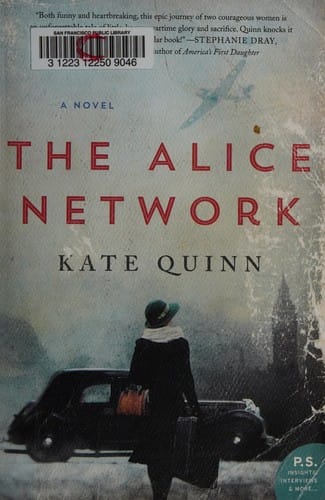
A young American woman searching for her missing cousin in postwar France crosses paths with a scarred, bitter former spy — who turns out to have been one of the most decorated female agents of the Great War. Quinn based her heroine on Louise de Bettignies, a real Lille native who ran one of the most successful Allied spy networks of WWI.
Where it takes you: Lille, in northern France, is the heart of this story — a city that spent four years under German occupation and has barely been touched by literary tourism despite its extraordinary WWI history. The network’s real routes ran through cafés and shops that still exist.
Setting: Ghana to America, 1700s–present
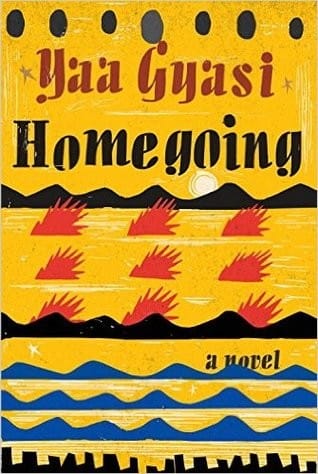
Beginning with two half-sisters in eighteenth-century Ghana — one who marries a British colonizer, one who is sold into slavery — Gyasi follows seven generations of one family across two continents. Each chapter is a different descendant, a different century, a different country. It is one of the most ambitious novels written in the last decade, and every page of it aches.
Where it takes you: Cape Coast Castle in Ghana, where the novel begins, is a UNESCO World Heritage Site and one of the most important — and haunting — sites of the transatlantic slave trade. A visit there changes how you read this book, and how you see everything that came after it.
Setting: Williamsburg, Brooklyn, early 1900s
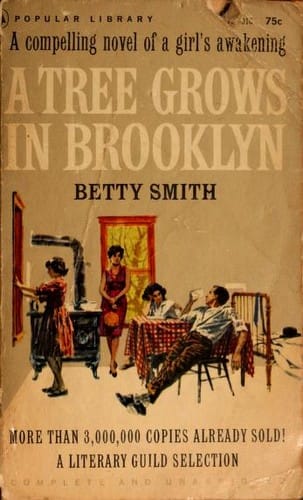
Francie Nolan grows up poor in a Brooklyn tenement at the turn of the twentieth century. Her father drinks. Her mother is iron. And Francie reads everything she can get her hands on, from the library one block and one world away. Smith’s semi-autobiographical novel is about class, ambition, and the specific texture of immigrant New York in a way that no other book captures.
Where it takes you: Williamsburg, Brooklyn — the neighborhood Smith wrote about is still there, transformed but navigable. The exact corner of Francie’s world, the libraries she loved, and the streets her family walked have been mapped by devoted readers for over eighty years.
Setting: Vietnam and America, 1960s–1970s

Frankie McGrath enlists as an Army nurse after her brother ships out to Vietnam, and the war she finds bears no resemblance to anything she was prepared for. Hannah’s 2024 novel is a tribute to the 11,000 American women who served in Vietnam — and who came home to a country that didn’t recognize them as veterans.
Where it takes you: The Vietnam Veterans Memorial in Washington, D.C. includes the names of eight women. The Vietnam Women’s Memorial nearby honors the nurses and civilians who served. In Vietnam itself, the War Remnants Museum in Ho Chi Minh City holds documentation of the war from the Vietnamese perspective that reframes everything.
Setting: Rural Georgia, 1930s

Celie writes letters to God because she has no one else. Walker’s Pulitzer Prize–winning novel follows her from abuse and silence toward voice and freedom, set against the red dirt roads of rural Georgia in the Jim Crow era. It is a novel about survival so complete it becomes transformation.
Where it takes you: Eatonton, Georgia — Walker’s birthplace and the model for the novel’s setting — is home to the Alice Walker Driving Tour, a self-guided journey through the landscapes that shaped her imagination. The town has embraced its most famous daughter, and the surrounding region carries the weight and beauty Walker put into every page.
These six novels span continents and centuries, but they share one thing: they are about women who refused to disappear. Women who did the work anyway, loved anyway, survived anyway. The places in these books are waiting. So is your passport.
Planning a literary trip around one of these destinations? Let’s talk. Research travel is what we do.
Trip announcements, curated reading lists, and the occasional dispatch — before anyone else.