
March 7, 2026
I’ve been thinking about this trip for years.
Not a single destination — a route. A pilgrimage, really, built around the rooms where civilizations decided what was worth keeping. Every library on this list exists because someone, at some point, believed that a book was more important than the building that housed it — and then built a building beautiful enough to prove it.
This is the literary traveler’s bucket list. Not a ranked list (every list you’ve seen has Trinity College Dublin at the top, and it deserves to be there, but that’s not the point). This is a pilgrimage — a sequence of rooms that, taken together, tell the story of how humanity learned to preserve what it knows.
Before the printing press, every book was a handmade object. A single manuscript could take years to produce. The monks who did this work understood something we’ve forgotten: that copying a text is an act of devotion, not a clerical task.
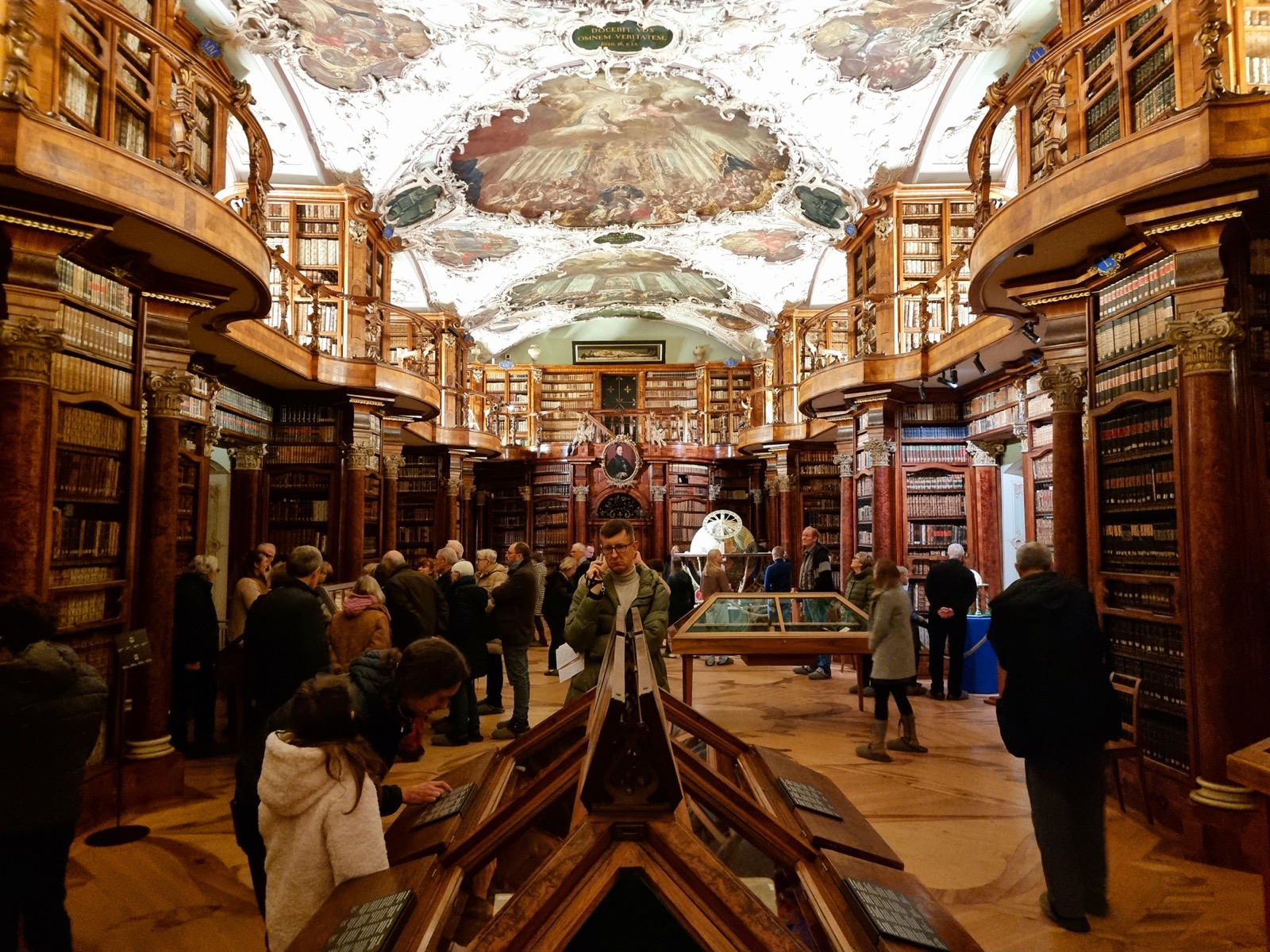
Abbey Library of St. Gallen, Switzerland. Founded in the 8th century. You enter in felt slippers so your shoes don’t damage the parquet floor. The manuscripts here predate the printing press by seven hundred years. Some of them are the only surviving copies of texts that would otherwise be lost. The Rococo hall completed in 1767 is beautiful, but the real beauty is in the scriptorium that preceded it — a room where monks spent lifetimes making sure you’d have something to read.
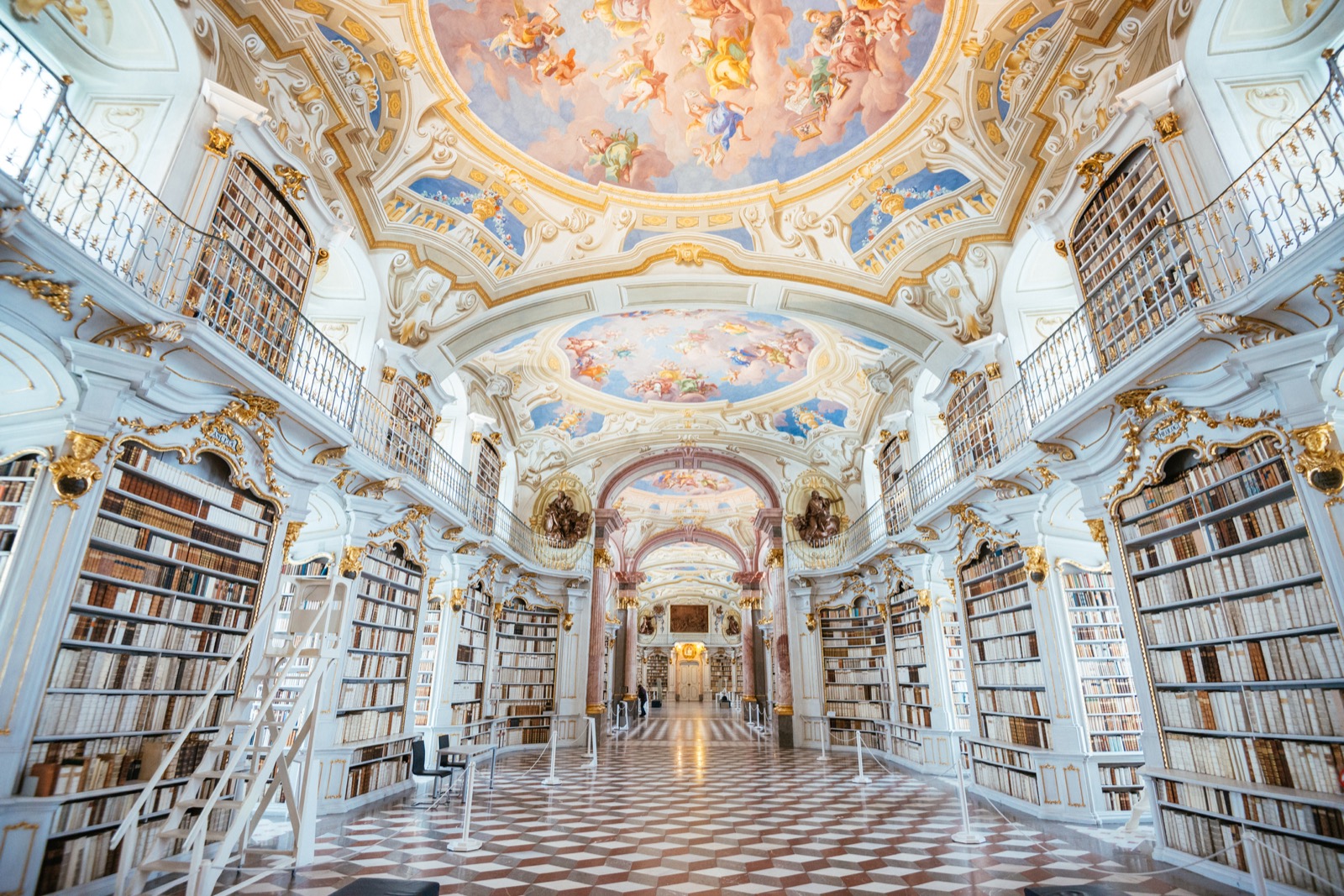
Admont Abbey Library, Austria. The world’s largest monastic library, completed in 1776. All white with gold accents — a deliberate Enlightenment-era design meant to fill the room with light. Seven ceiling frescoes depict the stages of human knowledge. It’s a room that argues, architecturally, that learning is sacred.
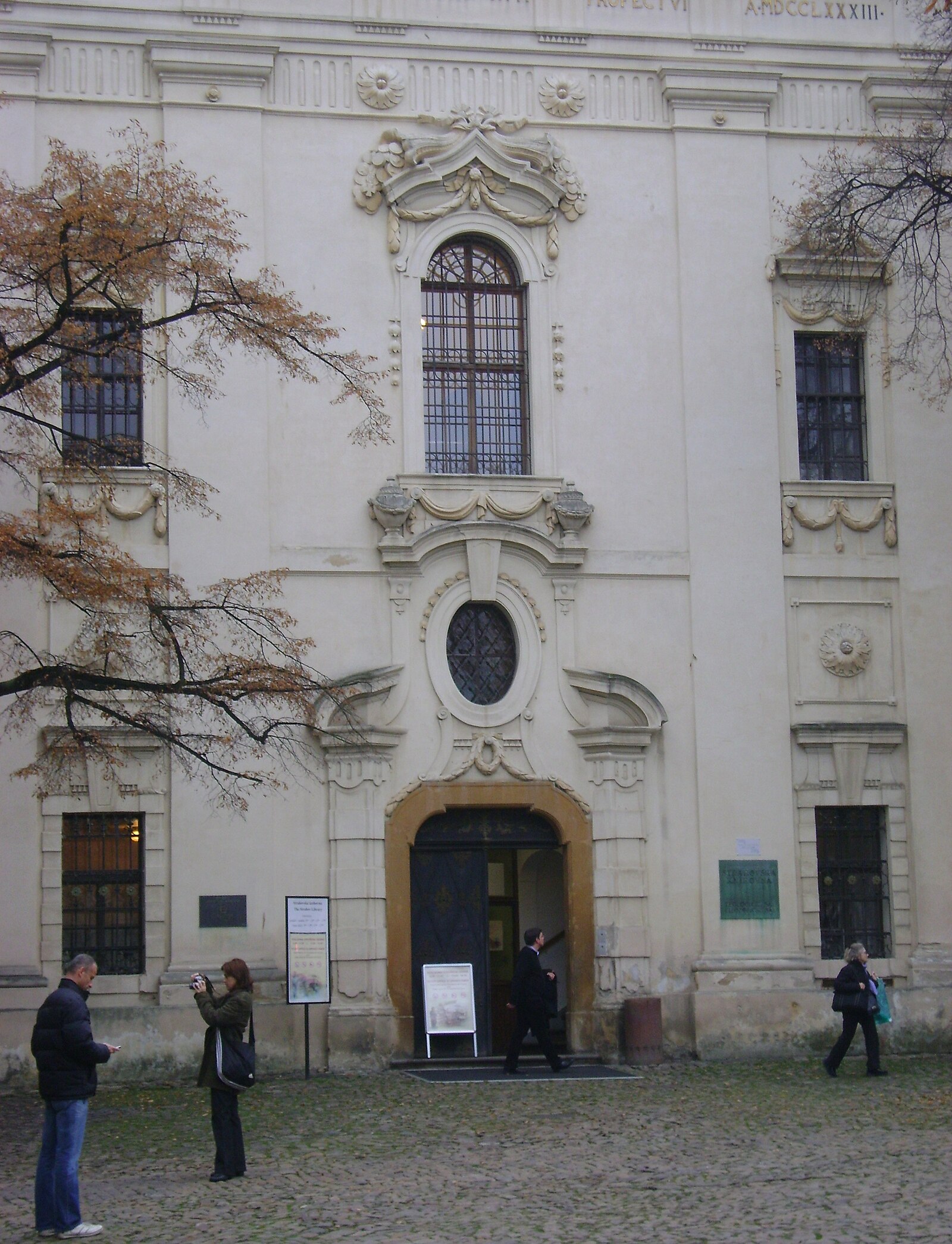
Strahov Monastery Library, Prague. Two halls: the Theological Hall (1679) and the Philosophical Hall (1794). The monastery has operated since 1143. It survived the Hussite Wars, the Thirty Years’ War, Habsburg rule, Nazi occupation, and forty years of communism. The books survived because the monks refused to leave them.
These three libraries are the beginning of the story. They’re where the work of preservation was done by hand, in silence, over centuries.
The printing press changed everything. Suddenly books could be copied faster than monks could write. Libraries stopped being private monastic collections and started becoming public institutions. The rooms got bigger. The audiences got wider.
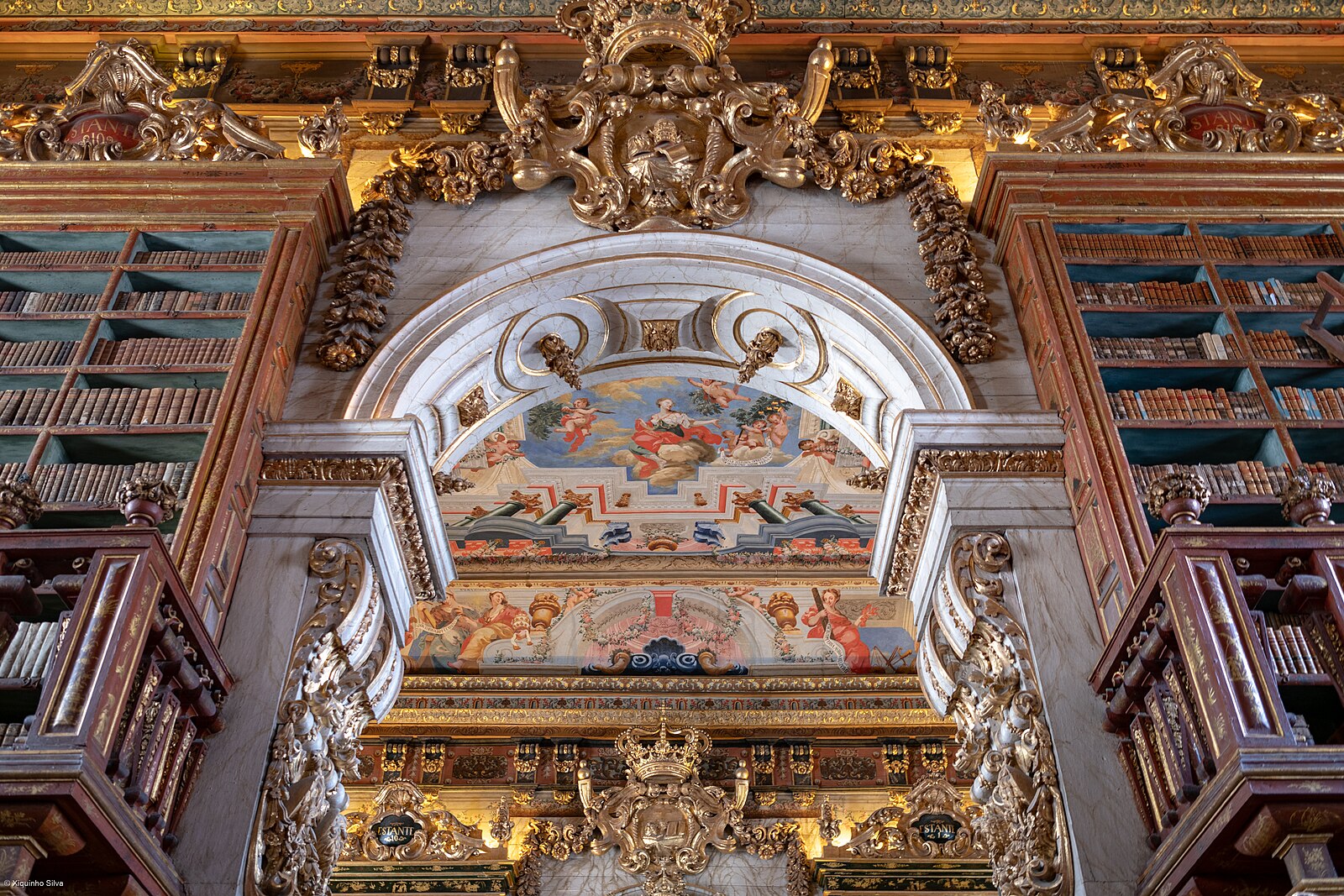
Biblioteca Joanina, Coimbra, Portugal. Built for King João V in the 18th century, this Baroque library is a riot of gilt, painted ceilings, and dark tropical wood. But the detail that stays with you is the bats. A colony of bats lives behind the bookshelves and emerges every night to eat the insects that would otherwise destroy the collection. The librarians have been coexisting with them for three hundred years. Nobody told the bats it was their job. They just showed up and started protecting the books.
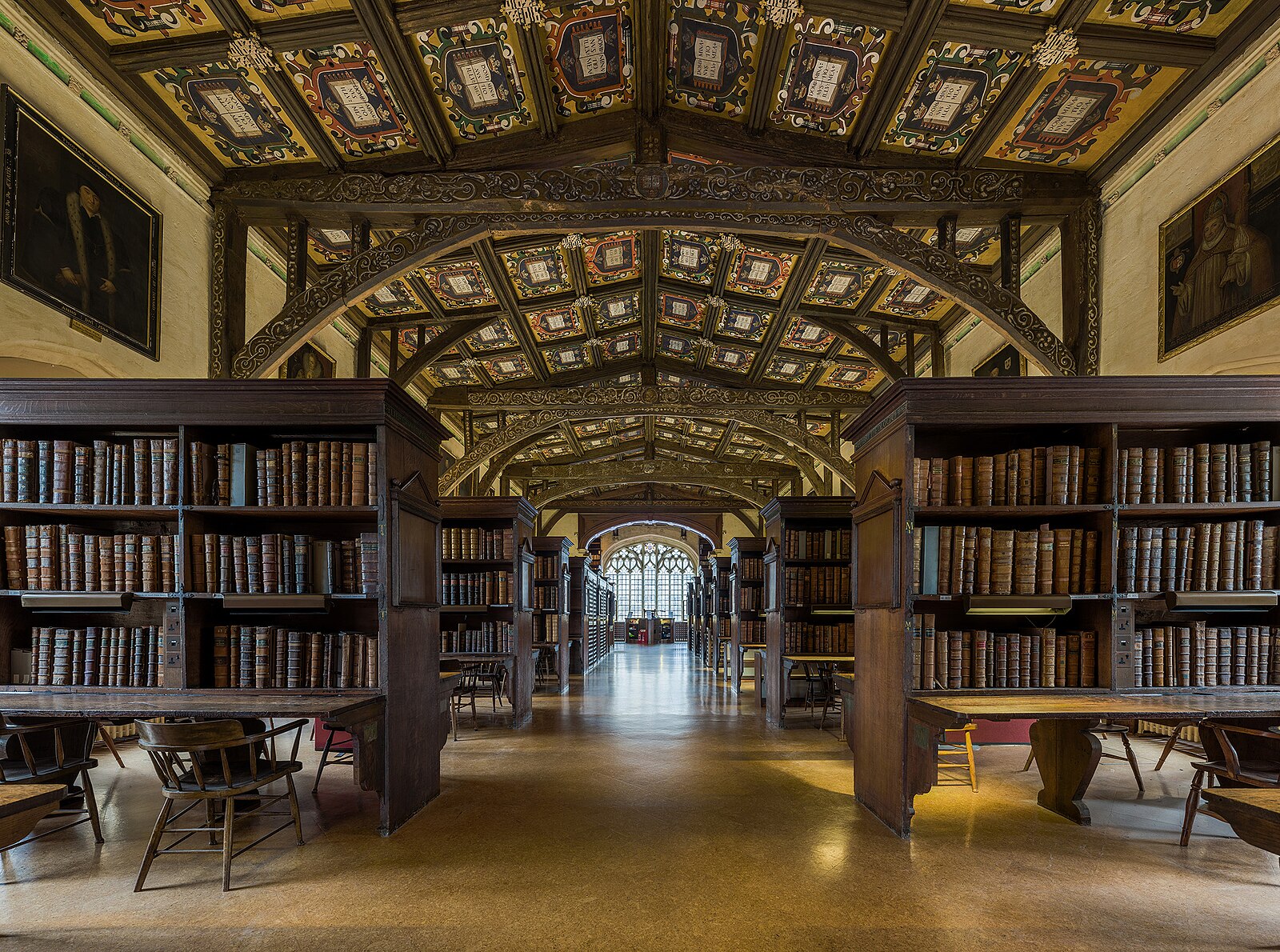
Duke Humfrey’s Library, Bodleian, Oxford. The oldest reading room in the Bodleian, dating to the 15th century. Painted ceiling panels. Chained bookcases (the chains kept the books from being stolen, not the readers from leaving). This is where the university formalized something radical: the idea that books belong to an institution, not a person, and that scholars have a right to access them.
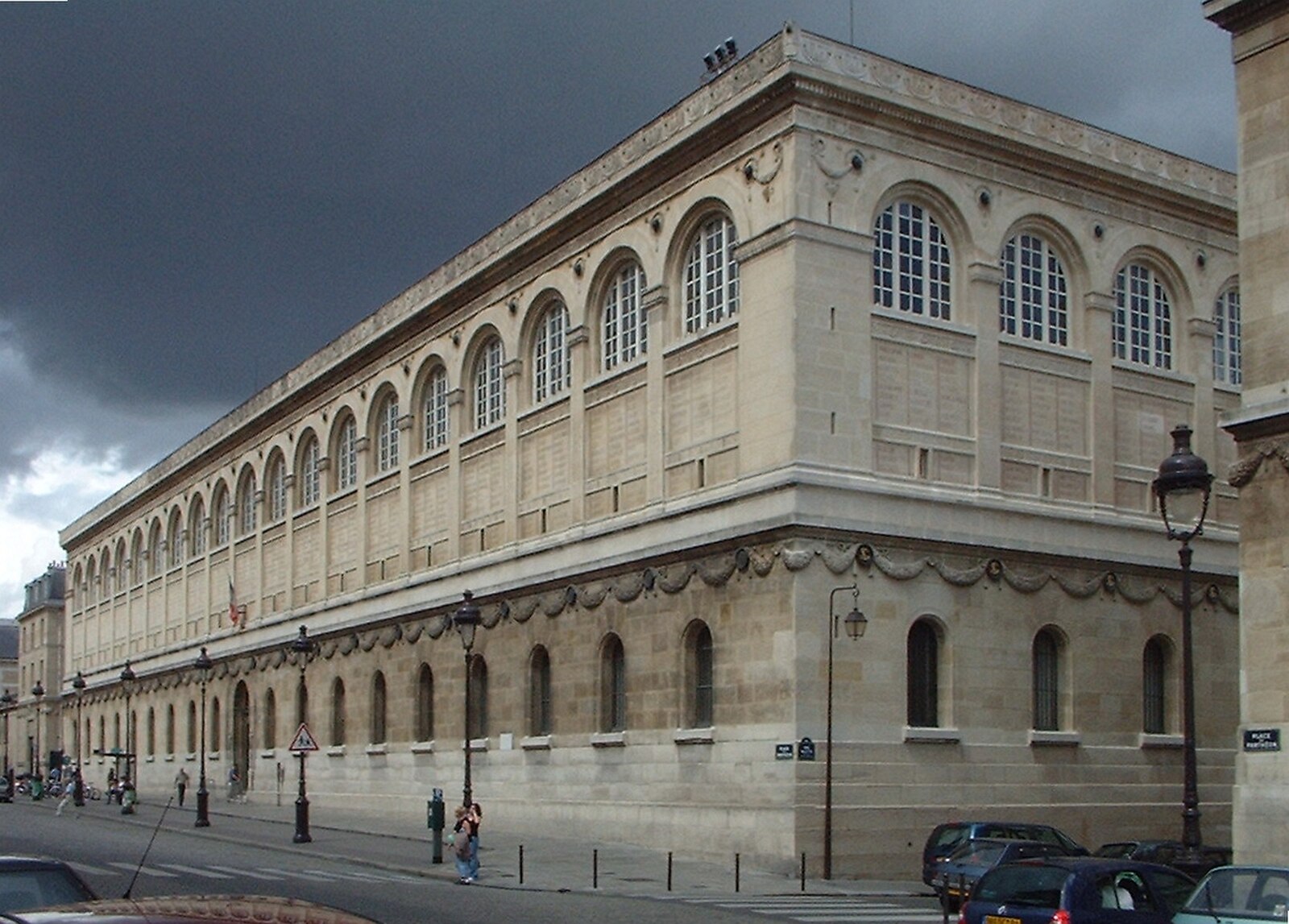
Sainte-Geneviève Library, Paris. Built in the 1840s, this was one of the first libraries to use iron-and-glass construction — technology borrowed from train stations and greenhouses. The reading room overlooks the Panthéon. The message was clear: a public library deserved the same engineering ambition as a cathedral or a railway terminus. Knowledge was infrastructure.
Libraries crossed the Atlantic as an act of identity. Immigrants built them to prove that culture survives displacement. Philanthropists funded them to prove that democracy requires an educated public. The buildings got grander because the stakes felt higher.
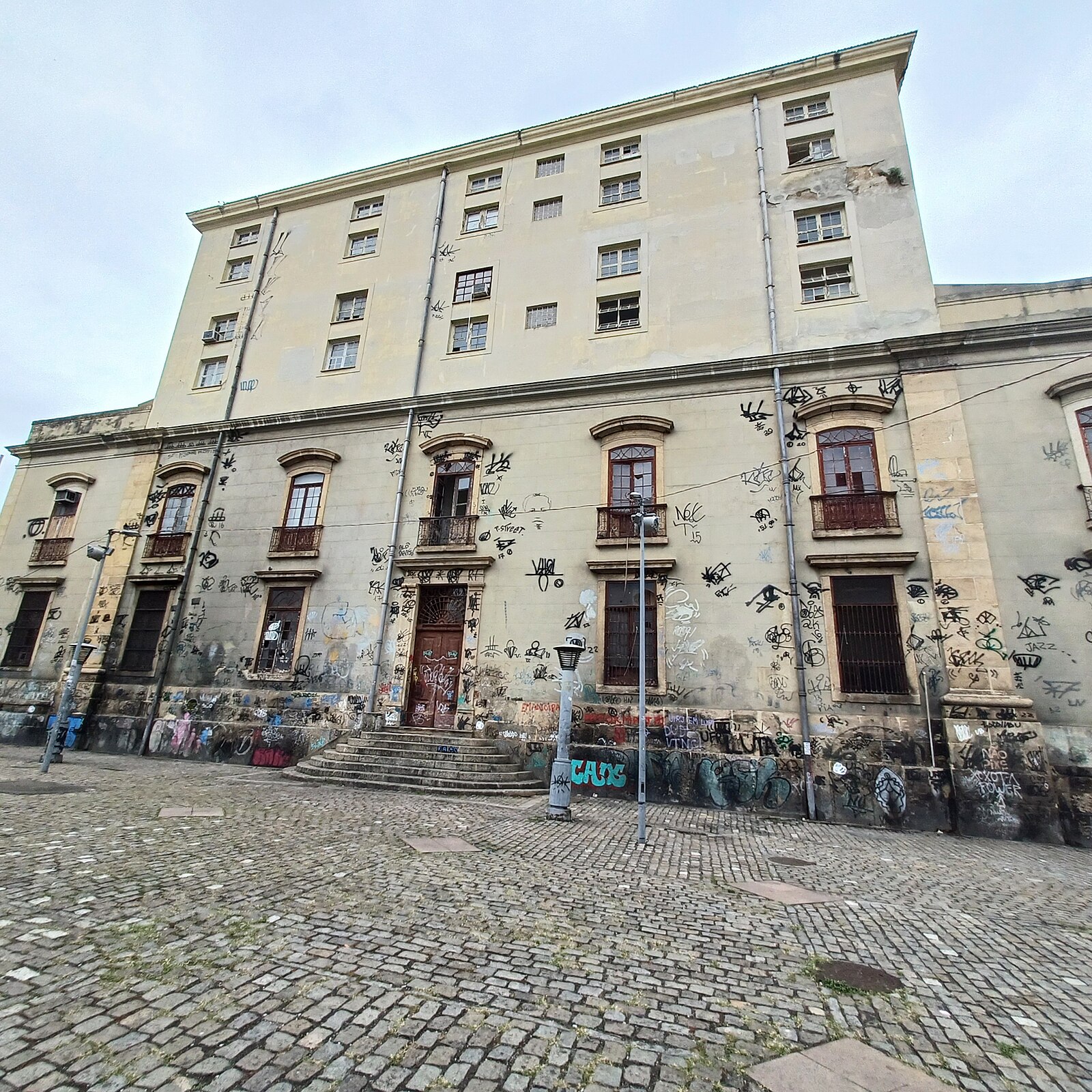
Royal Portuguese Cabinet of Reading, Rio de Janeiro. Portuguese immigrants built this Neo-Manueline library in the 1880s to preserve their literary heritage in Brazil. Over 350,000 volumes. The carved oak galleries and stained-glass skylight are their answer to the question every diaspora faces: how do you keep a culture alive when you’re an ocean away from home?
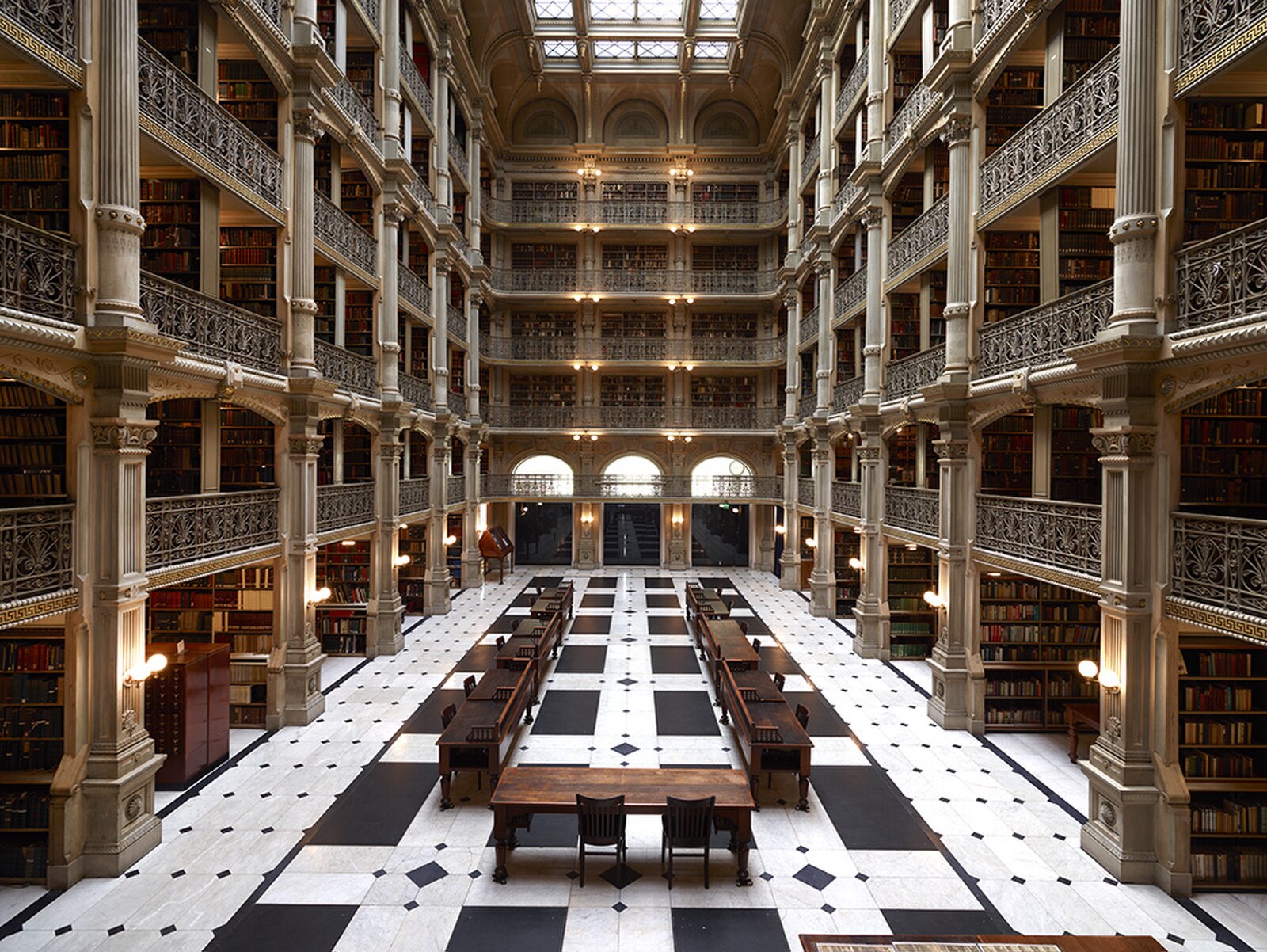
George Peabody Library, Baltimore. Five tiers of cast-iron balconies surrounding a skylight 61 feet above the floor. A gift to the city from George Peabody in 1878. Free and open to the public. Baltimore is a city that knows something about endurance, and this library — beautiful, free, and still standing — is proof that the things you build for everyone tend to last.
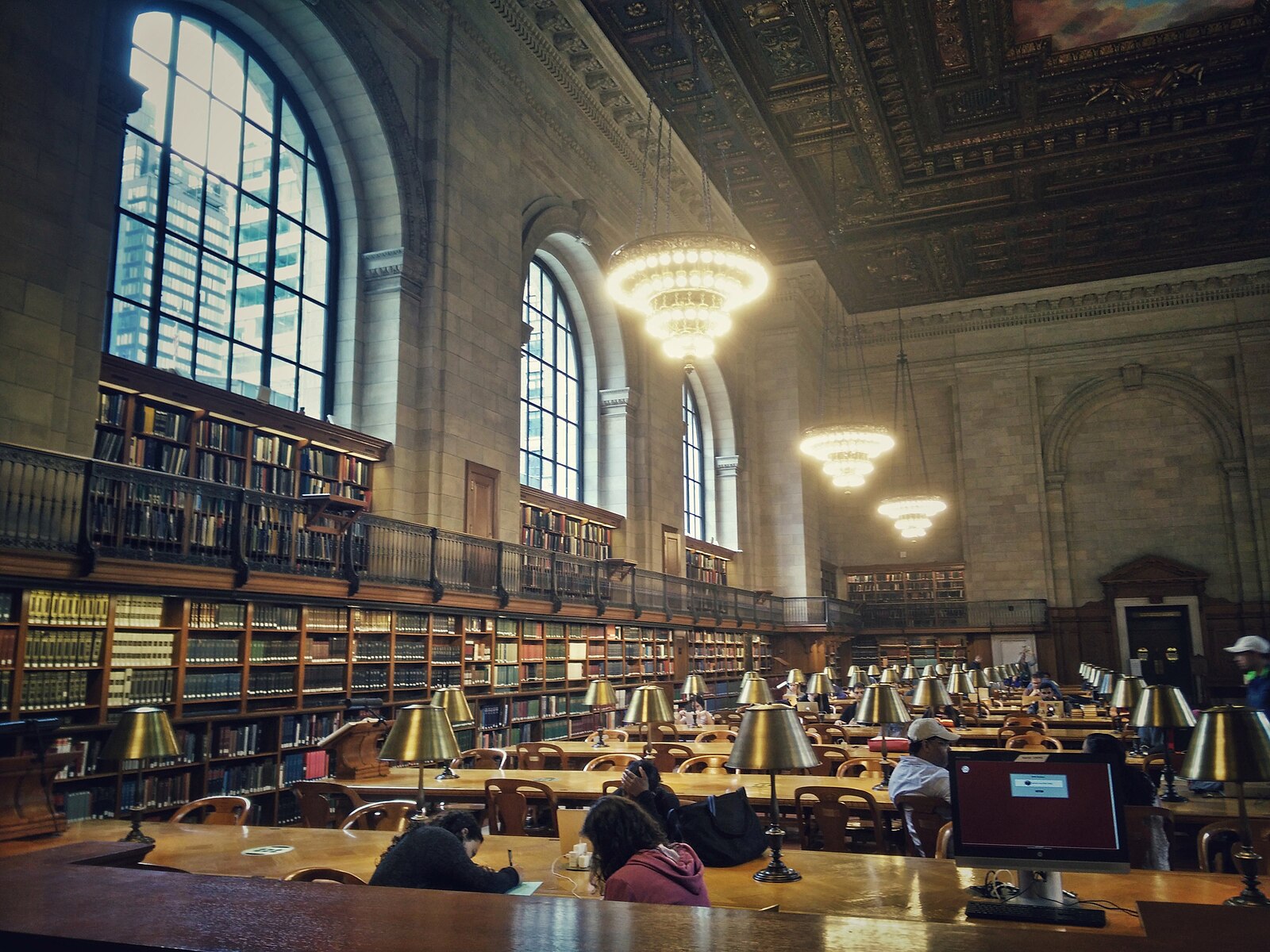
New York Public Library, Stephen A. Schwarzman Building. The Rose Main Reading Room is 78 feet wide and 297 feet long, with a painted ceiling of open sky. The lions out front were named Patience and Fortitude during the Depression. The library is free. It has always been free. In a city that charges for everything, this room is still a gift.
Not every library is an institution. Some are arguments made in retail.
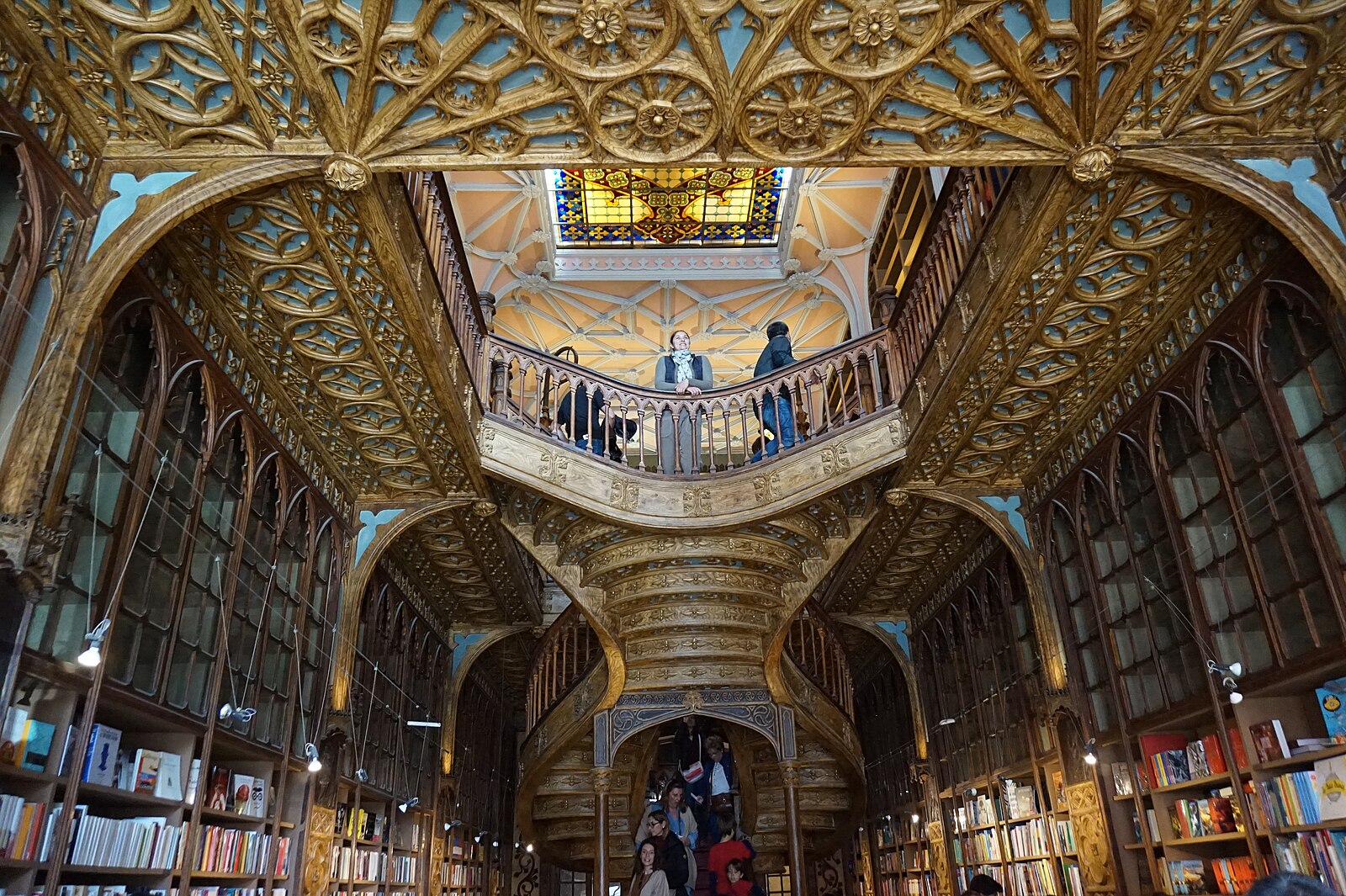
Livraria Lello, Porto. A bookshop, not a library — but the crimson staircase and stained-glass ceiling make the distinction feel irrelevant. Built in 1906, it’s a room that says: buying a book should feel as important as reading one.
Shakespeare and Company, Paris. Not beautiful in the traditional sense — cramped, chaotic, with a piano upstairs and beds tucked between the shelves for visiting writers. But it’s on the pilgrimage because it represents something the grand libraries don’t: the idea that a bookshop can be a home, and that literary culture is built by individuals, not just institutions.
If I were planning this trip — and I am — here’s the route:
Week One: Central Europe. Fly into Zurich. Train to St. Gallen (Abbey Library). Drive to Admont (Abbey Library). Train to Prague (Strahov Monastery). Three monastery libraries in seven days. The story of preservation.
Week Two: Western Europe. Train from Prague to Paris (Sainte-Geneviève, Shakespeare and Company). Eurostar to London. Train to Oxford (Bodleian). Ferry or flight to Dublin (Trinity College). The story of the public library.
Week Three (or a separate trip): The Iberian Route. Fly into Porto (Livraria Lello). Train to Coimbra (Biblioteca Joanina). Continue to Lisbon. Three days, three centuries of Portuguese literary culture, and a colony of bats who’ve been doing their job longer than most institutions.
The American Leg. Baltimore (Peabody) and New York (NYPL) can be a long weekend. Take the Amtrak between them. Bring a book.
I’ve been building this itinerary in my head for years. If you want help turning it into reality — for yourself, your book club, or a group of friends who’d rather visit a library than a beach — let’s talk.
Photo credits: Duke Humfrey's Library by Diliff, CC BY-SA 3.0. George Peabody Library by Carol M. Highsmith, CC BY-SA 4.0. Rose Main Reading Room by Los Paseos, CC BY-SA 2.0. Strahov Monastery by Paulo Cerqueira, CC BY-SA 3.0. Sainte-Geneviève Library by Pol, CC BY-SA 3.0. Livraria Lello by Matt Kieffer, CC BY-SA 2.0. Biblioteca Joanina by xiquinhosilva, CC BY 2.0. Cuypers Library by Jedesto, CC BY-SA 4.0. Royal Portuguese Cabinet by Joalpe, CC BY-SA 4.0. All via Wikimedia Commons.
Trip announcements, curated reading lists, and the occasional dispatch — before anyone else.