
February 9, 2026
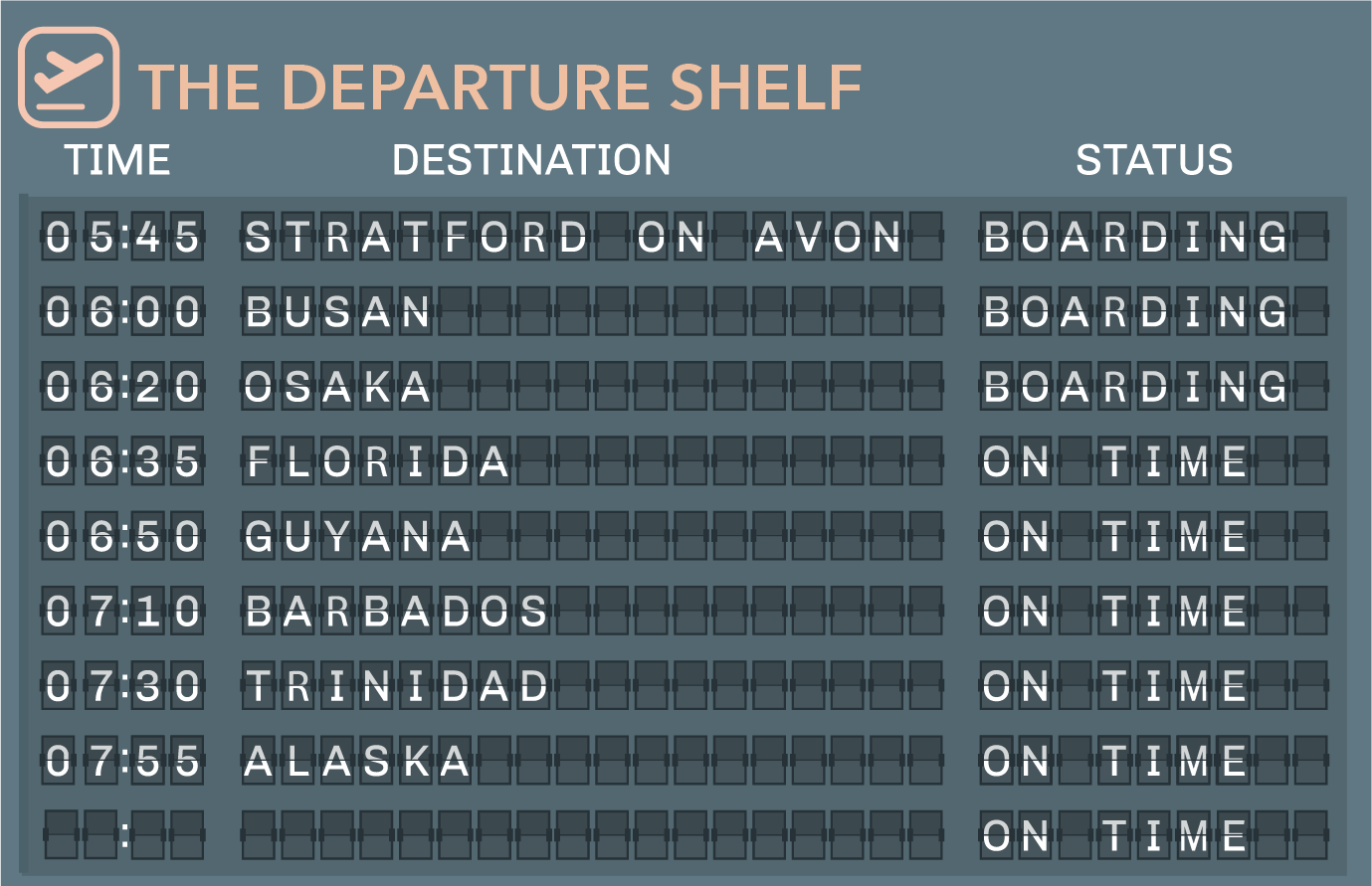
Every book club has that moment: someone finishes describing a scene, and the whole table goes quiet because everyone is imagining the same place. The cobblestone street. The churchyard. The kitchen where everything changed.
These five historical novels create that moment — and then dare you to go there. Each one is built on real geography so specific that the trip practically plans itself. And each one is better as a group experience, because the questions these books raise become richer when you’re standing in the place together.
⚠️
Fair warning: mild spoilers ahead! I’ll try to keep the big twists under wraps, but if you like going into a book knowing absolutely nothing, consider this your cue to add these titles to your TBR, then come back. We’ll be here.

If your book club hasn’t read this yet, the timing couldn’t be better. Chloé Zhao’s film adaptation — nominated for eight Academy Awards this season, with Jessie Buckley earning a Golden Globe for her performance as Agnes — has made this the most talked-about literary adaptation in years. But the novel does something the film can’t: it puts you inside the silence of a house where a child has just died, and lets you stay there.
O’Farrell spent months in Stratford in 2017, walking the path between Shakespeare’s birthplace and Anne Hathaway’s Cottage, flying kestrels, planting a medicinal herb garden to understand the character she was building. When she visited Holy Trinity Church and asked where Hamnet was buried, nobody knew. That discovery — a boy erased from history — became the emotional core of the novel. In 2022, she returned to plant two rowan trees as the first memorial Hamnet and his twin sister Judith had ever received.
Why it works for book clubs: The novel’s central tension — between a mother’s grief and a father’s transformation of that grief into art — generates the kind of debate that doesn’t resolve in one evening. Was Shakespeare’s use of his son’s name an act of love or appropriation? Does Agnes’s anger make sense to you, or does the ending change your mind? These questions land differently when you’re standing in the churchyard where both rowan trees now grow.
The trip: Stratford-upon-Avon is compact enough for a long weekend. Walk between the birthplace and the cottage the way O’Farrell did. Visit Holy Trinity. See the rowan trees. If your group has time, add a day at the Globe in London — the novel’s climactic scene takes place there, and the RSC staged its own adaptation of the book in Stratford’s Swan Theatre. Walk at the pace that lets you notice things.
Photo by Christopher Eden / Unsplash
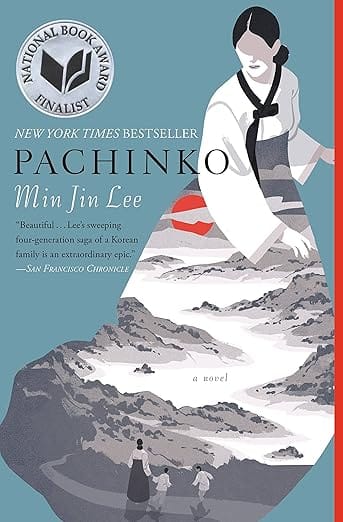
Four generations of a Korean family navigate identity, survival, and belonging in a country that considers them permanent outsiders. Lee’s novel spans 1910 to 1989, moving from a fishing village in Yeongdo (Busan) to the Korean ghetto of Ikaino in Osaka to the pachinko parlors that became one of the few industries where Koreans could build wealth. Lee lived in Tokyo from 2007 to 2011, conducting hundreds of interviews with Korean-Japanese people, visiting pachinko parlor back rooms, and walking through historic Korean villages. She scrapped an earlier draft entirely after her fieldwork showed her the story needed to begin decades earlier than she’d planned. A National Book Award finalist, one of the NYT’s 10 Best Books of 2017, and #15 on the NYT’s 100 Best Books of the 21st Century. The Apple TV+ adaptation — told in three languages — wrapped its acclaimed second season in October 2024.
Why it works for book clubs: The novel’s structure makes it almost impossible not to argue. Each generation makes choices that look like survival from one angle and surrender from another. Your group will debate whether Sunja’s decisions were brave or desperate, whether Noa’s assimilation was freedom or self-erasure, and whether the pachinko business represents resilience or entrapment. The book’s opening line — “History has failed us, but no matter” — is a thesis statement your club can spend an entire evening on.
The trip: Start in Busan, where Sunja grew up. Visit the Jagalchi Fish Market (the novel’s world of seafood vendors and market women is still alive here), the Gamcheon Culture Village, and the coastal area of Yeongdo where the story begins. Then take the overnight Panstar Cruise ferry from Busan to Osaka — a 19-hour crossing that mirrors the family’s own passage from Korea to Japan. In Osaka, walk through Tsuruhashi (Koreatown), eat yakiniku and kimchi in the neighborhoods that sustained the characters, and visit an actual pachinko parlor. A group of four to eight makes this trip manageable and the discussions electric — you’ll have nineteen hours on the ferry to talk through the first half of the book before you set foot in Japan.
Discussion question that only works after the trip: After spending time in both countries, do you understand why the family stayed in Japan — or does it make their choice harder to comprehend?
Photo by Thomas Roger Lux / Unsplash
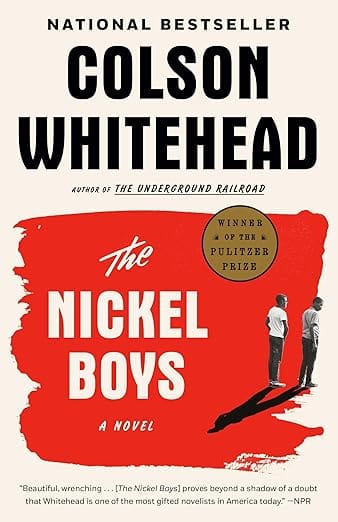
Whitehead’s Pulitzer Prize-winning novel is based on the real Arthur G. Dozier School for Boys, a reform school in the Florida Panhandle that operated from 1900 to 2011. The novel is devastating, spare, and precisely located in the landscape of Jim Crow-era Florida. RaMell Ross’s 2024 film adaptation brought renewed attention to the story, but the novel remains the more demanding — and rewarding — experience.
What makes Whitehead’s process unusual is that he deliberately chose not to visit Marianna. He built the novel from investigative journalism and forensic reports instead. That distance is part of the book’s power — and it means that a reader who does visit the site encounters something the novel intentionally withholds.
Why it works for book clubs: This is a book that demands conversation. It’s short enough to read in a weekend and complex enough to discuss for months. The ending alone will divide your group. But the deeper discussion is about what we owe to stories like this — stories that were suppressed for decades — and what it means to witness a place where that suppression happened.
The trip: This is a more difficult trip emotionally than the others on this list, and your group should discuss that openly before committing. The Dozier School site still exists in Marianna. The forensic archaeology work by the University of South Florida that uncovered the unmarked graves is publicly documented. Tallahassee, the novel’s other primary setting, provides context for the civil rights era the story inhabits. A book club that takes this trip together will have a shared experience that fundamentally changes how they discuss history, accountability, and the purpose of fiction.
Photo by Sarina Gito / Unsplash
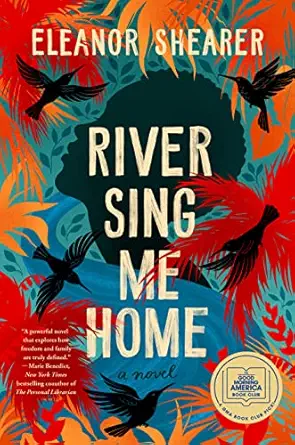
A mother searches for her five stolen children across the Caribbean after the Emancipation Act of 1834. Rachel’s journey takes her from a sugar plantation in Barbados, by river through the forests of British Guiana, and across the sea to Trinidad — water is the novel’s throughline. Shearer did fieldwork in St. Lucia and Barbados for her Oxford master’s degree on how slavery is remembered on the islands today, interviewing activists, historians, and family members. A GMA Book Club pick and one of Time’s 100 Must-Read Books of 2023.
Why it works for book clubs: The novel’s core question — what does freedom actually mean when the systems that enslaved you are still intact? — will fuel hours of discussion. Each child Rachel finds has built a different kind of life, and your group will debate which versions of freedom are real. The book is accessible and deeply moving without being so heavy that it shuts conversation down. The ending bends toward reunion and hope.
The trip: This is the one where your book club gets on a boat. Charter a catamaran or sailing yacht in the southern Caribbean and follow Rachel’s route: start in Barbados, sail to Trinidad, read chapters at each port that correspond to that leg of her journey. Visit Bridgetown where Rachel first searches for Mary Grace. Explore the sugar plantation history that forms the novel’s foundation. A group of four to eight is ideal for a crewed charter — large enough for lively discussion on deck, intimate enough that the experience stays personal. The sailing itself becomes part of the reading: you feel the distance between islands the way Rachel did.
Discussion question that only works after the trip: Standing on a former plantation, looking at the same sea Rachel crossed — does the beauty of these islands make the history harder or easier to hold?
Photo by Kathryn Maingot / Unsplash

The Great Alone by Kristin Hannah
Hannah’s novel about a Vietnam veteran who moves his family to a remote homestead in 1974 Alaska is one of the most viscerally located novels in recent American fiction. The cold, the isolation, the landscape’s indifference to human survival — these aren’t just setting. They’re the antagonist.
Why it works for book clubs: This is a novel about domestic violence in a place where there is literally nowhere to go. That combination — the beauty of the landscape and the terror inside the house — generates intense discussion. Your group will talk about what isolation does to families, what it means to be trapped by geography, and whether the Alaska setting makes the story more or less universal.
The trip: The Kenai Peninsula is accessible from Anchorage — a short flight or a stunning drive. Homer, the town at the end of the road where much of the novel takes place, is a real community with a fierce local identity. Visit in summer when the light lasts twenty hours, or in early fall when the darkness starts to close in and you begin to understand what the novel’s winter chapters actually feel like. Alaska is one of those settings that cannot be understood from a desk. The scale of it, the silence of it, the way the landscape dwarfs every human structure — your book club will talk about the trip for years.
Photo by Kathrine Coonjohn / Unsplash
If your club wants a trip that’s logistically easy and culturally rich, start with Stratford-upon-Avon or Berlin. If you want a trip that’s emotionally challenging and historically important, consider Marianna. If you want something physically dramatic and unlike anything you’ve experienced, choose Alaska.
And if you want someone to build the itinerary around the book so your group can focus on the reading and the experience rather than the logistics — that’s exactly what we do.
Tell us which book your club is reading next →
Ready to turn one of these books into a trip? Early & Away plans travel for book clubs designed around the novels you love.
Trip announcements, curated reading lists, and the occasional dispatch — before anyone else.


